Plan for the Launch of Publication

In launching this publication we wish to invite our peers to read and immerse themselves in the world that we have created with reference to bubblegum.

Our publication is a digital one, and it can be accessed via QR codes that will be shown during the launch.

This publication is a reflection of a hypothesised exhibition that we would have all curated as a group of students.

We will have bubblegum on offer to be enjoyed with the publication.
Process of writing the editorial

Writing the editorial as a group was also a very interesting experience. Finding ways of relating the subject of bubblegum to all of our practices was quite fun.

We all individually wrote concepts that we thought could be associated with bubblegum, and linked them up together whilst trying to better each others excerpts.

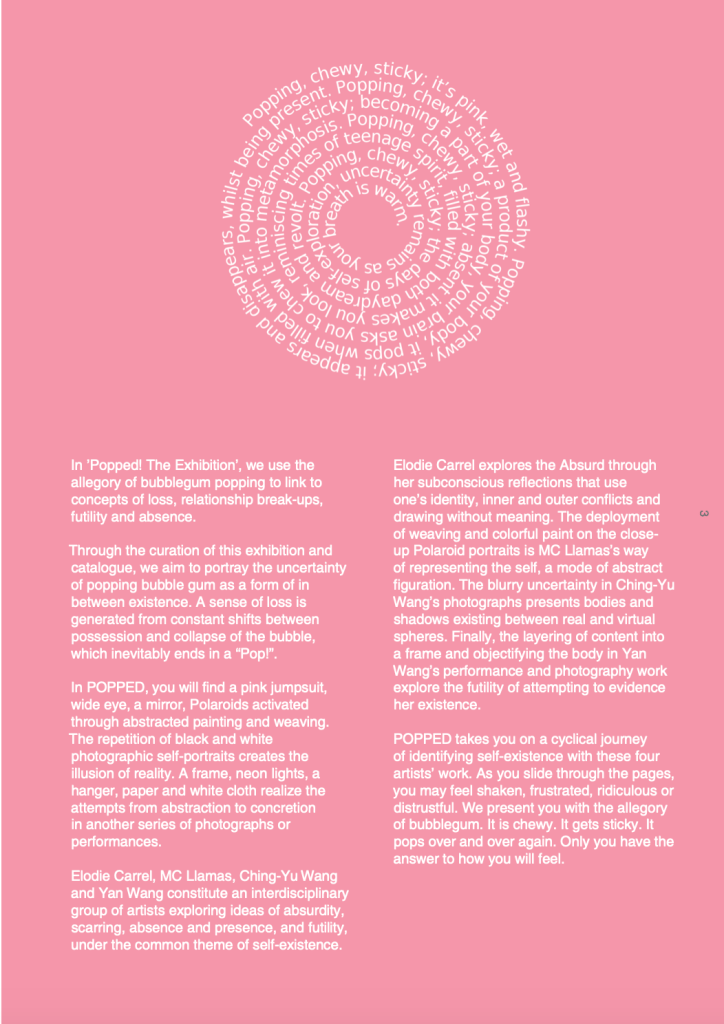
The idea of the spiral came whilst writing and sitting down as a group, we thought the aesthetic of the infinite spiral would match the one of the bubble bursting.

Publication

For this project we started working as a group on a publication that would have been the result of a curated art exhibition. After discussions and workshops, we decided to use the allegory of bubblegum to discuss subjects of existentialism , loss and alienation.

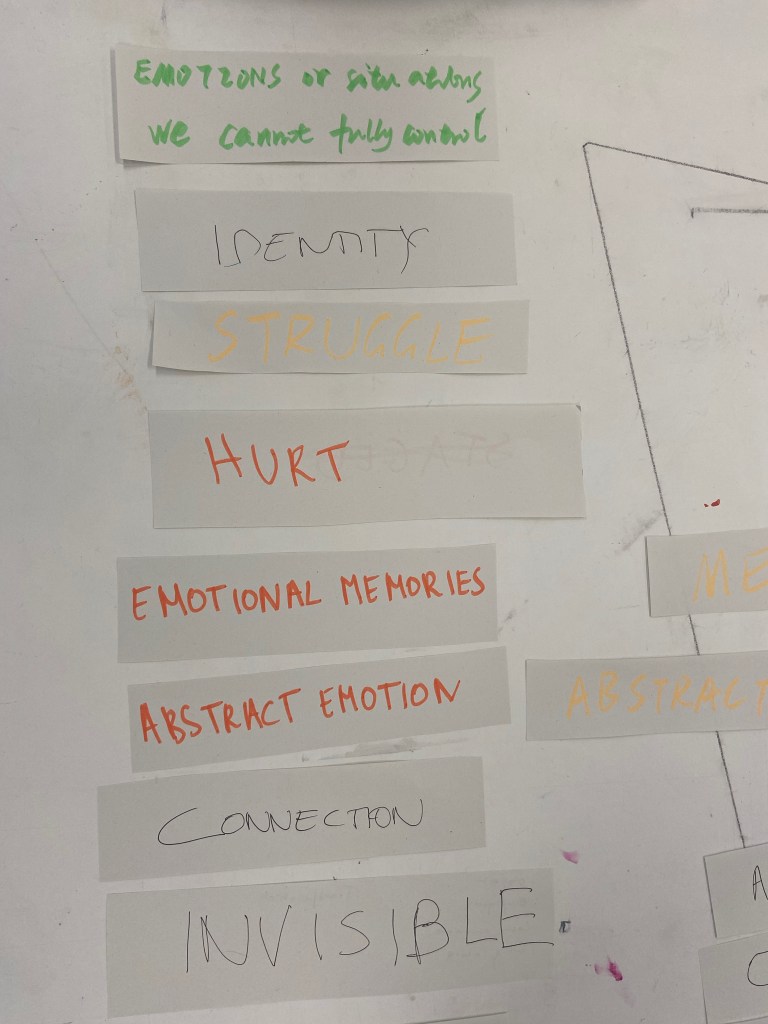
In this workshop, hosted by Clare, we were asked to write specific words, whilst looking at the statement of one of our group peers. We then cut the words out and together, brainstormed to see which points we had in common.

It was an extremely interesting exercise, and really helped in the process of self discovery, by association to the work of others.

Tarkovsky

After a tutorial with Adam I looked into the works of Tarkovsky, specifically the “Stalker”, where there are numerous scenes of loneliness and monochromatic tones, fading and perspective all elements inductive of a certain inner turmoil. The film maker’s representation and takes on the sublime and metaphysical became greatly inspirational to me. He had a distinct way of representing dreamscapes and concepts of memory.

In this movie, the filmmaker aims to reproduce a certain idea of a mystery, It is about the paradox paranoid idea allegorically represented within a landscape paved with ruins and the unknown. It is descriptive of a place no one ever comes back from. It is a journey of self discovery, through the language of landscape and psychogeography.

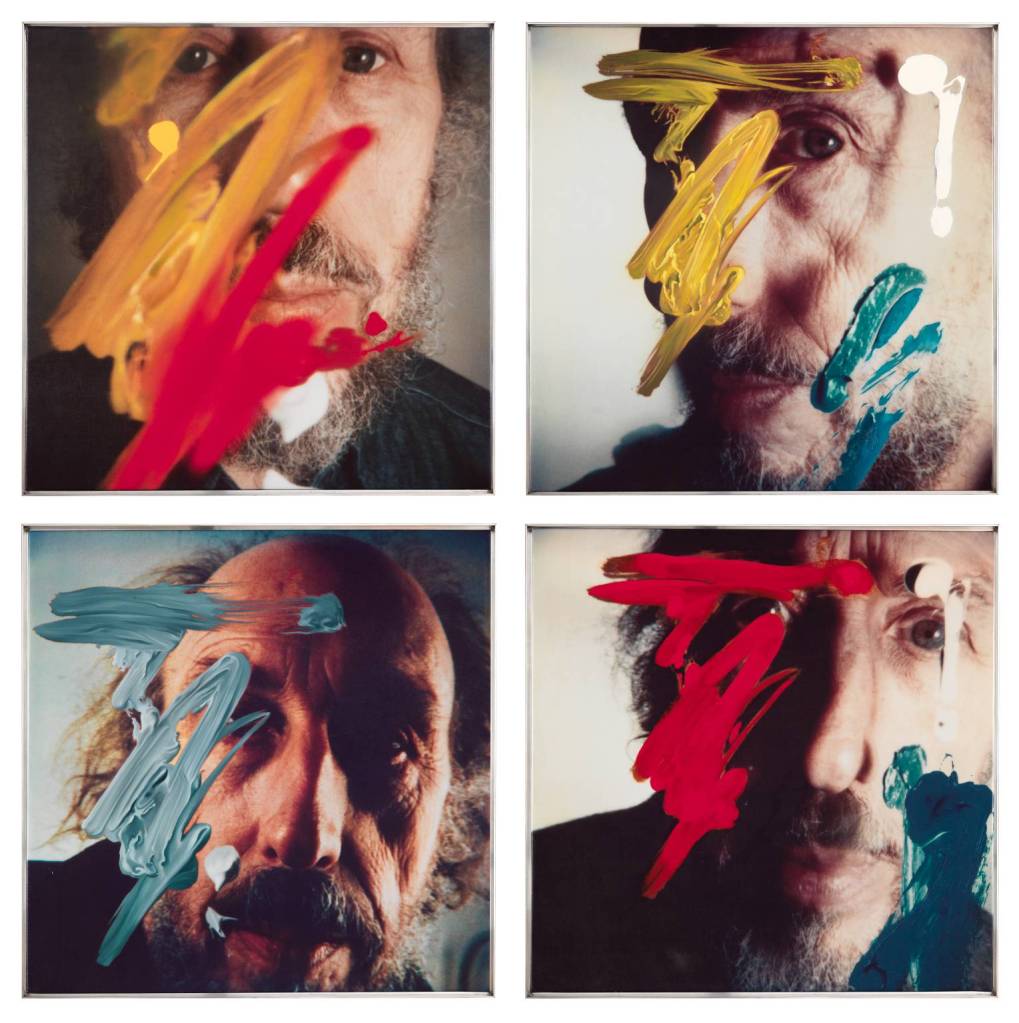
Richard Hamilton Polaroids

Four Self Portraits – 05.3.81 1990 Richard Hamilton 1922-2011 ARTIST ROOMS Acquired jointly with the National Galleries of Scotland through The d’Offay Donation with assistance from the National Heritage Memorial Fund and the Art Fund 2008 http://www.tate.org.uk/art/work/AR00141

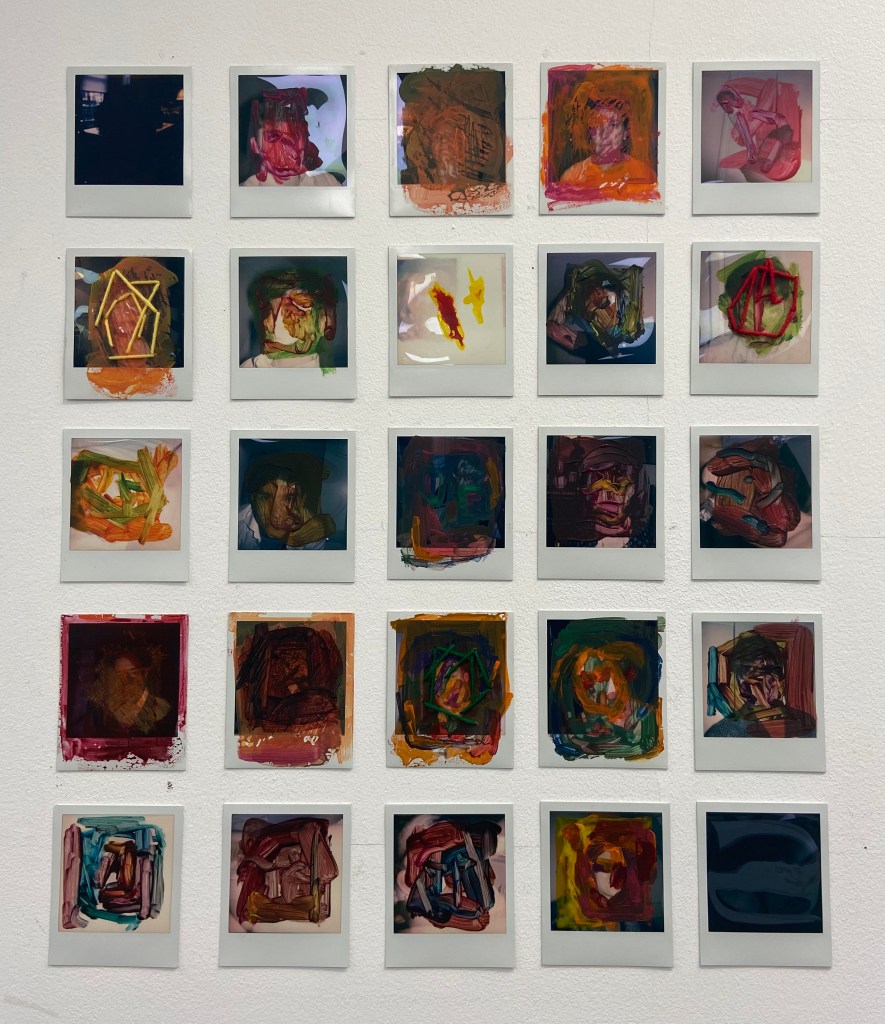
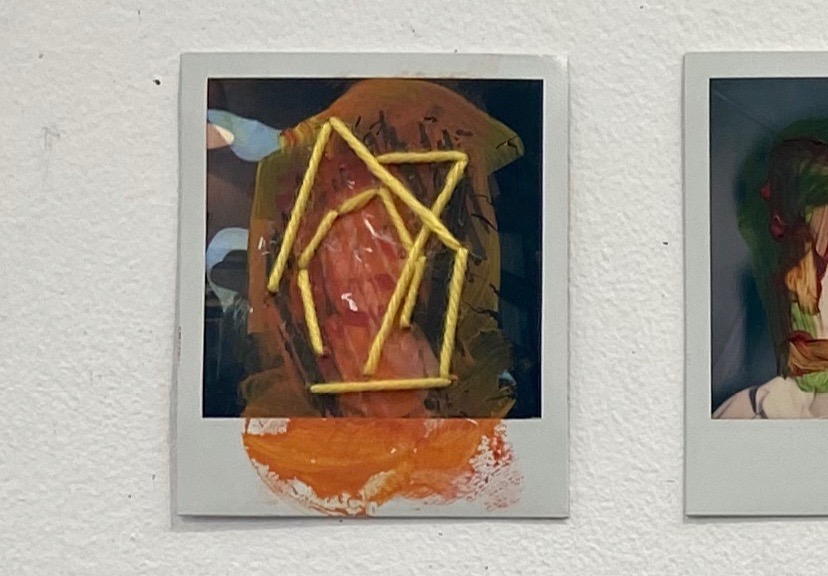
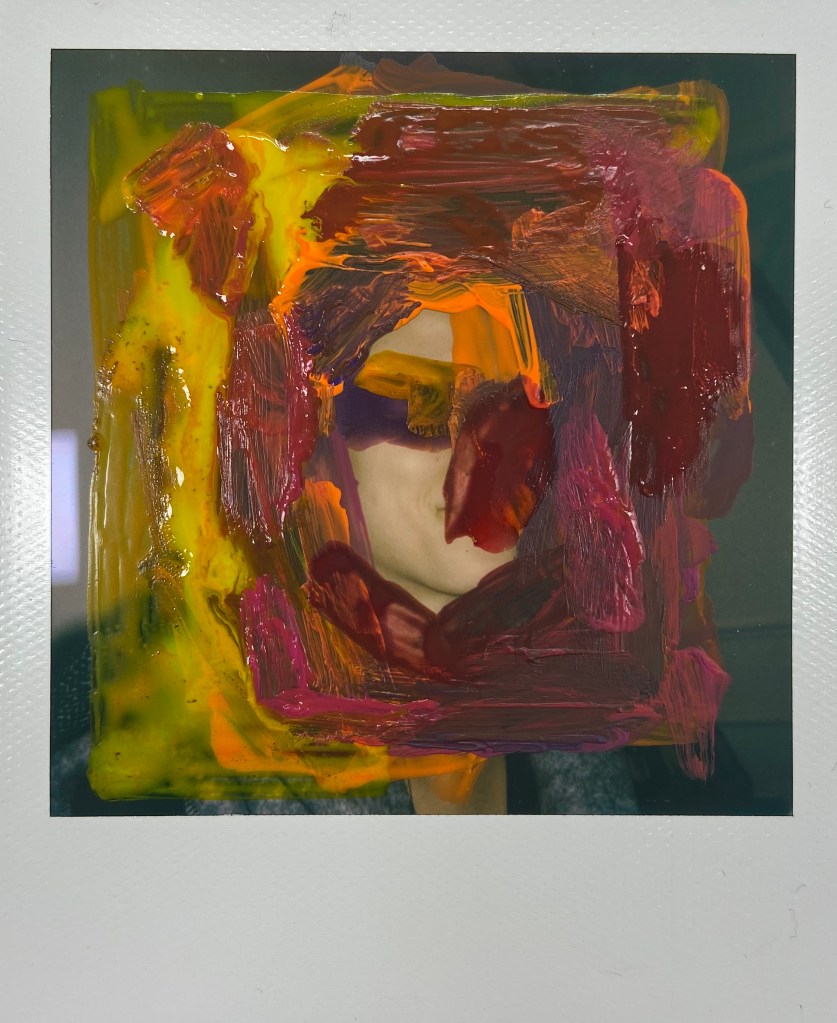
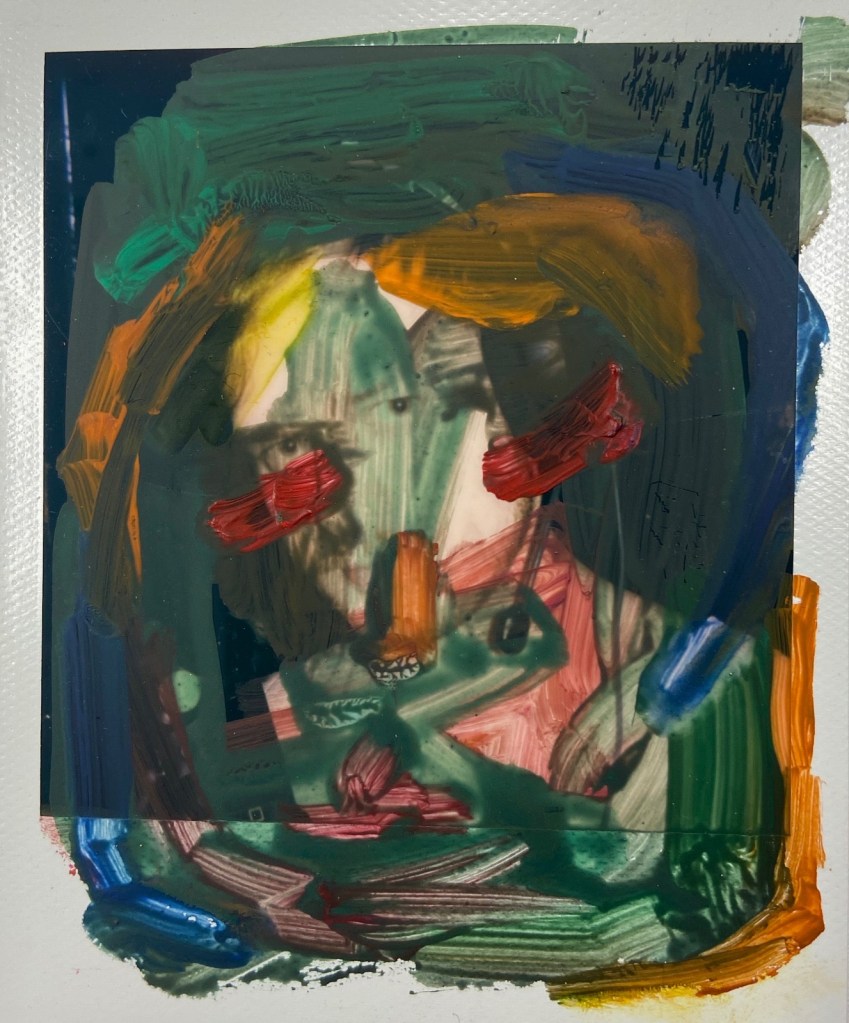
I came across these works by Richard Hamilton, which greatly inspired me to make my own version of them. I am a great admirer of the Pop Art movement, and its inclusion of colour in art as symbol for elevated state of being and representative of the art historical canons.

As quoted on the Tate website: “Richard Hamilton was a key figure in the British and international Pop Art movements, as well as being one of its main theoreticians. The majority of his work is concerned with the art historical traditions in contemporary art. ‘Four Self-Portraits 05.3.81’ takes portraiture as its starting point, using new media to expand its boundaries. Instead of limiting the portrait to a single image, Hamilton uses four. In the early 1980s, the artist took Polaroids of himself and added layers of acrylic colour. After ten years, he digitally converted the photos into transparencies to be made into enlarged prints. Mounted on canvas, they epitomize the layered way in which Hamilton’s works deal with artistic media.”

Alex Israel at Gagosian

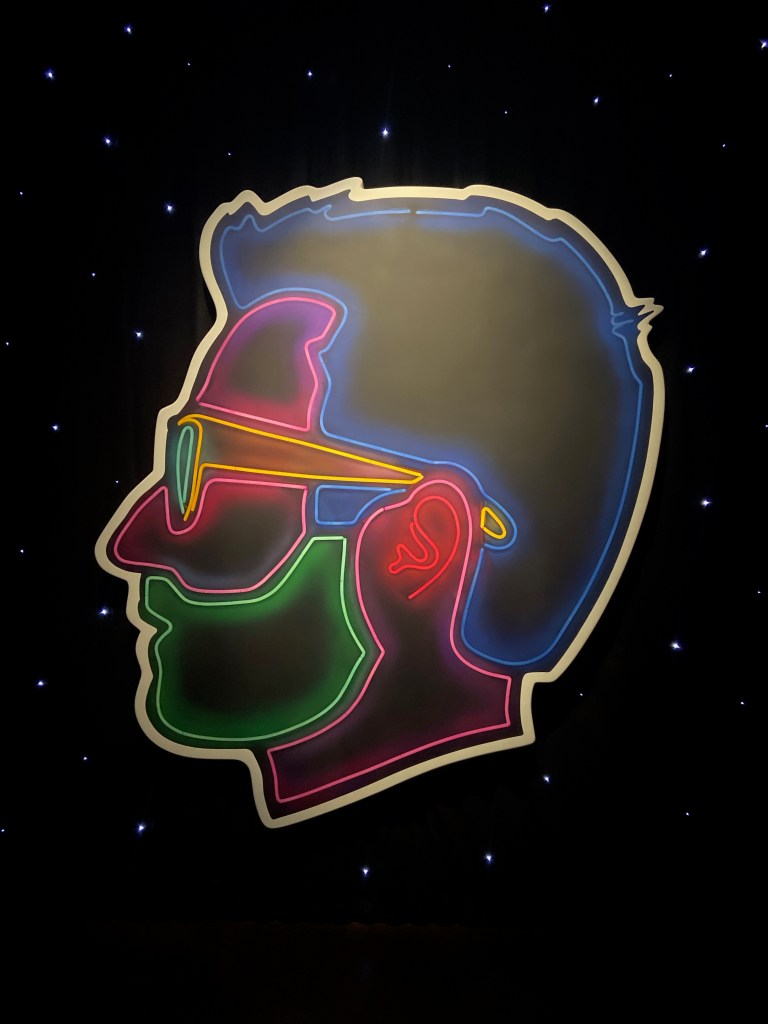
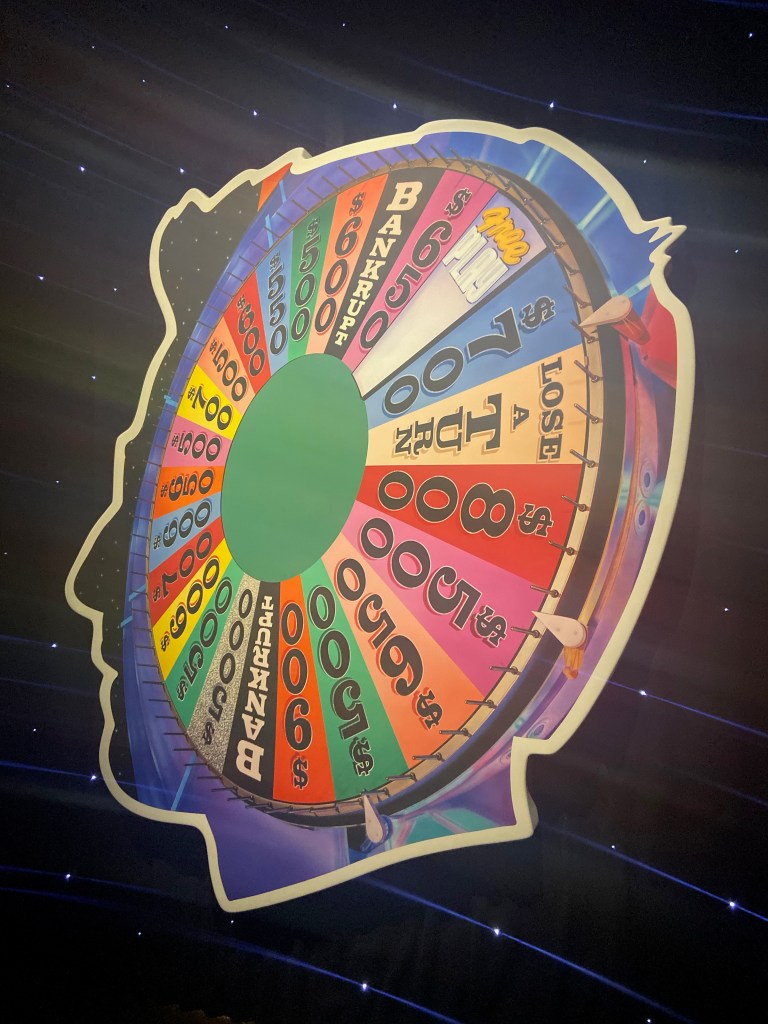
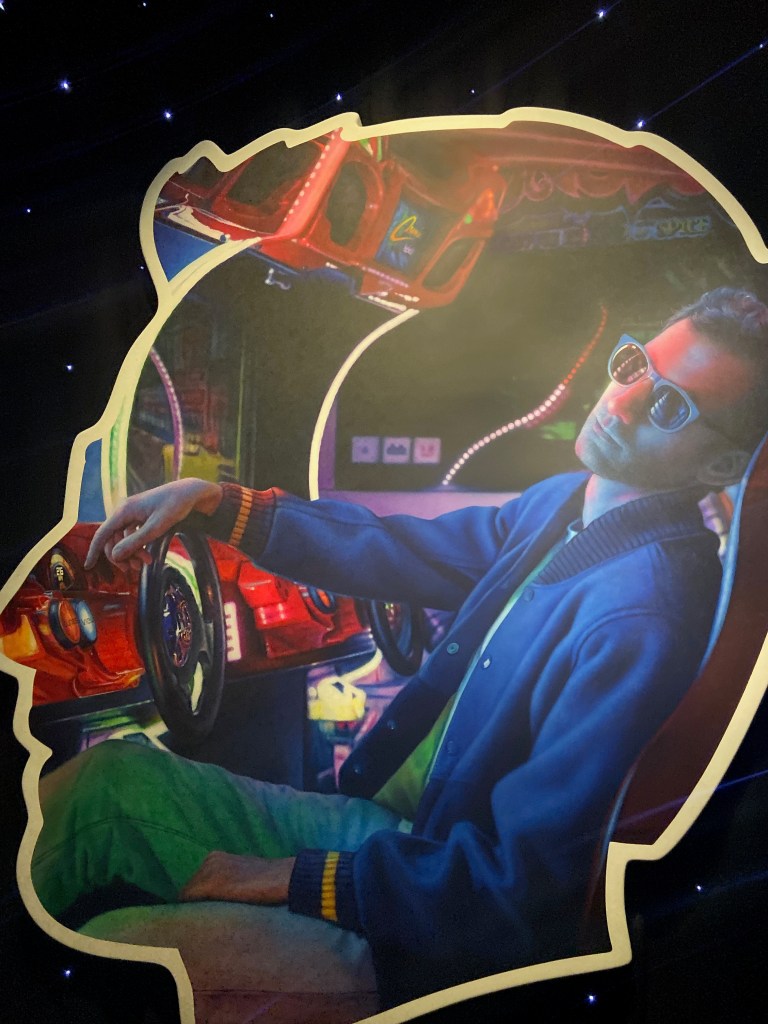
I’ve been following Alex Israel’s work since visiting Frieze LA last year. I find his use of self portraits really intriguing, this idea of using his own silhouette as a vessel for visual information about himself and his lifestyle.

As quoted on the Gagosian press release: ” Mining the “food chain” of show business, he interrogates and confounds the fine line between “talent” and “raw material” while reframing and re-presenting manufactured items whose formal and auratic properties are often overlooked”