Bigger is not better

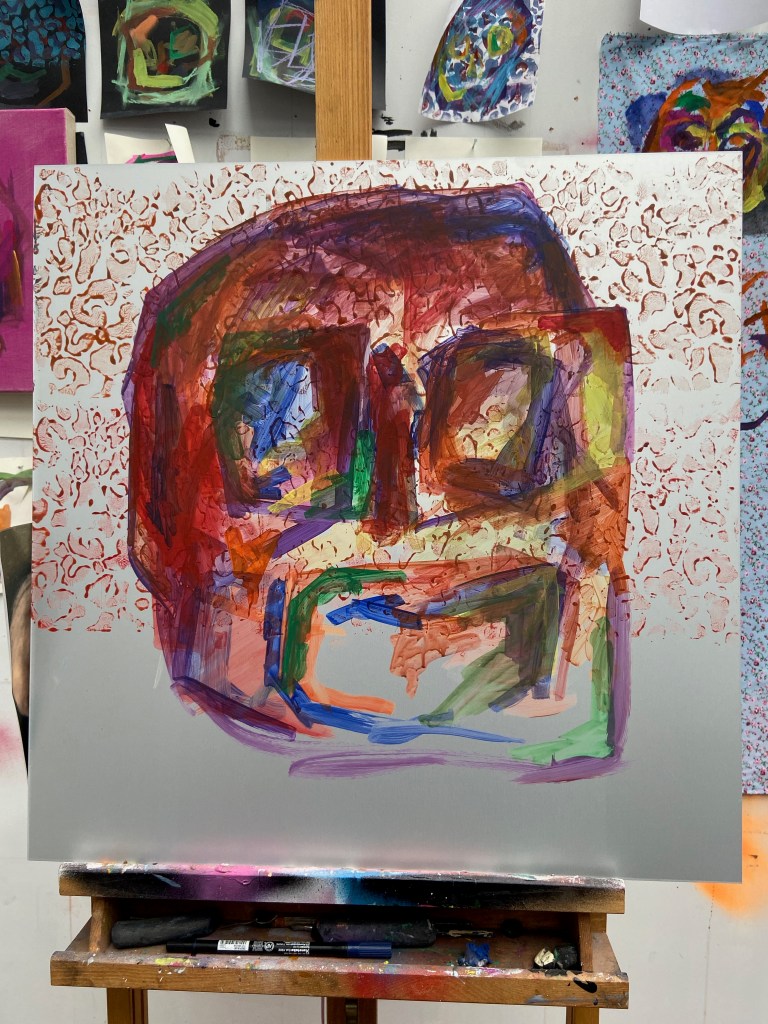
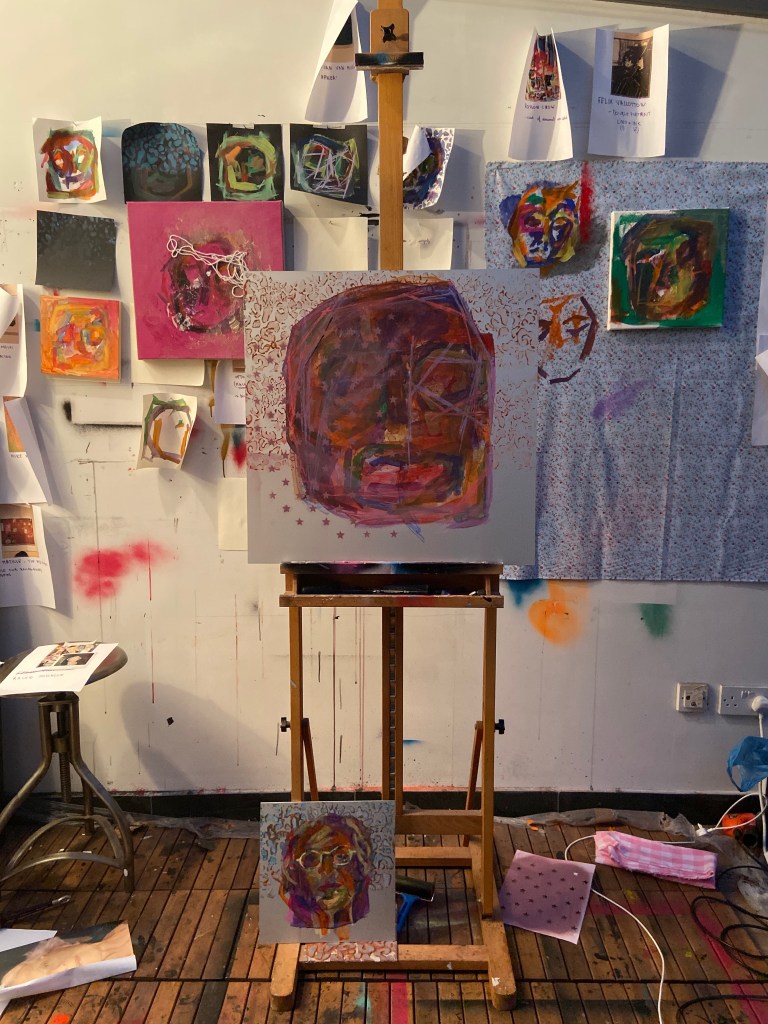
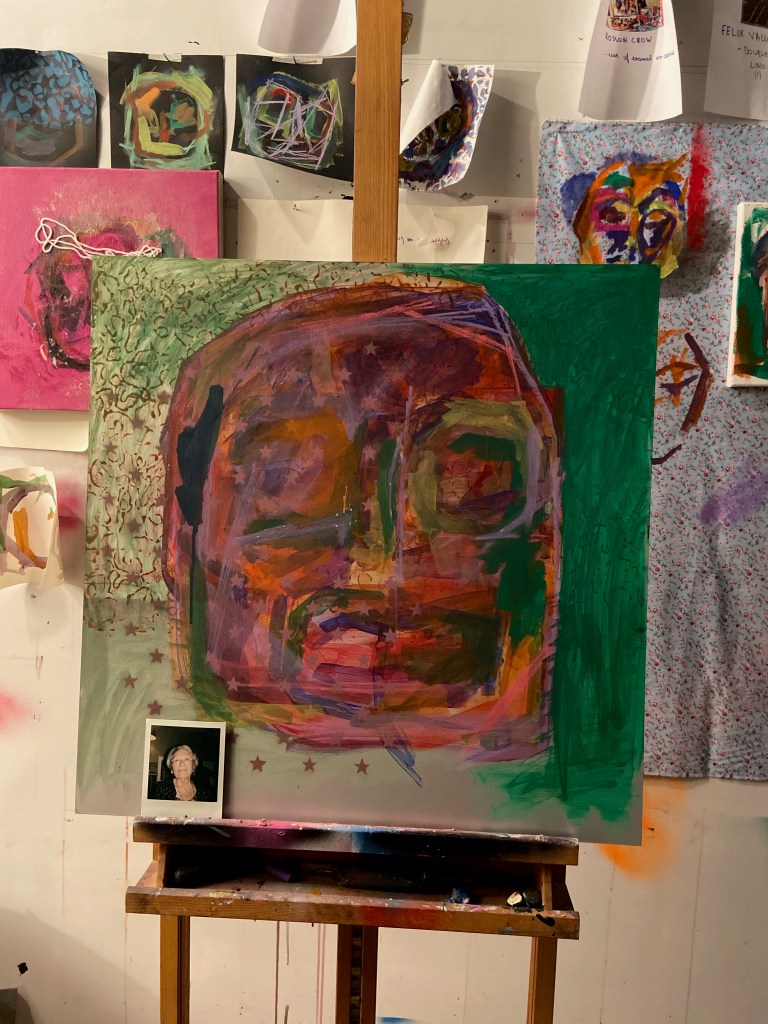
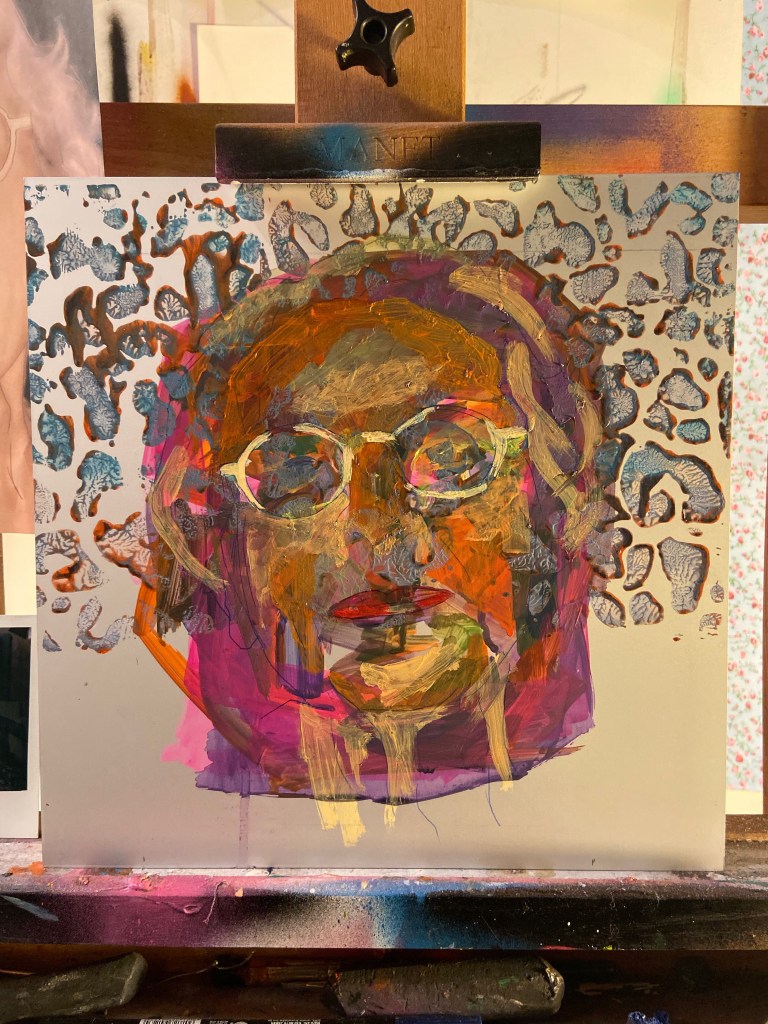
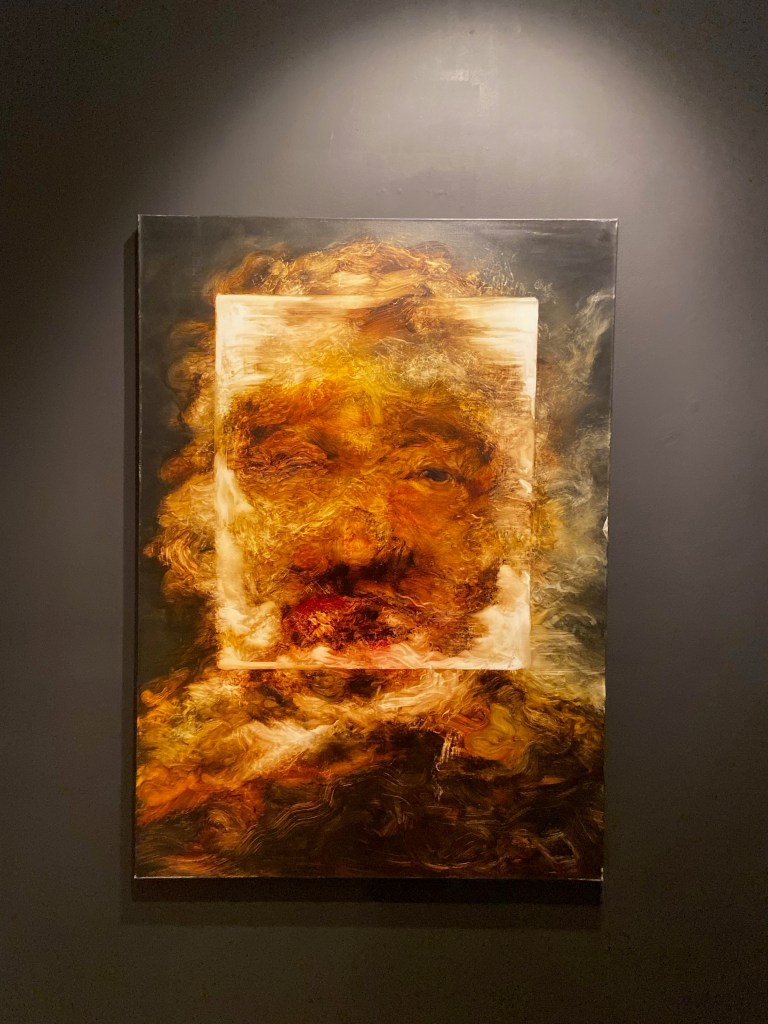
After having started to work on the small portrait of my grandmother, I made a bigger painting on aluminium, but failed to make it work. I was at it for 2 weeks, every day trying to make it work, but unsuccessful so. This was an extremely frustrating endeavour.

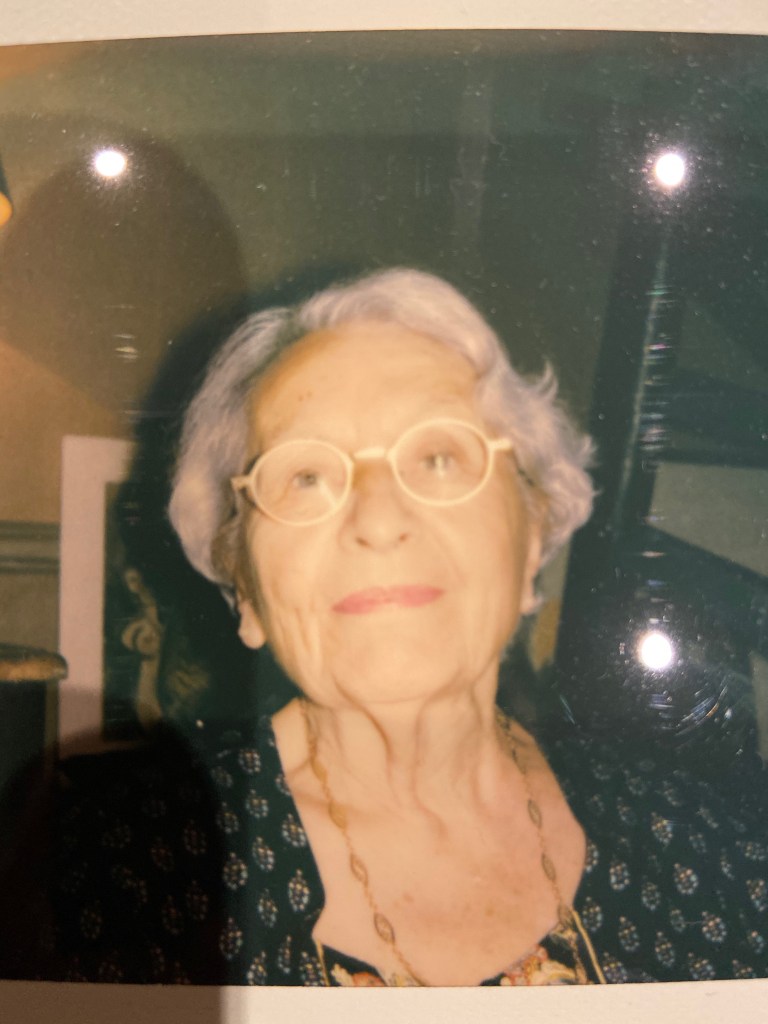
In the process of failing with this painting, I tried looking back at more figurative elements of the photo that I had taken, but the layers just wouldn’t add up, and the work kept failing.

I tried simplifying it by adding a layer of flat perspective stencilling. I thought that the pattern would somehow help me in making sense of the whole work, but it didn’t, it only made it worse.

Making things public lecture

Notes for the lecture:

Speaker and listner

Consumer and data

AIMS

What constitutes the public

How to make a work public

Relationship to the other as related to the viewer 

Who is the public and what is public

Instagram and the value of it as a platform 

Choice of display t the public 

Making yourself public?

Depending on the public

And the number of viewers

Size of the lease perspective of seeing

Sensations that one focuses on

Definition of the public

Different kind of public

Audience and questions communication

How is audience different from public?

Audience has a relevance to the context and engagement 

Audience has a sensory engagement 

Audience has a judgment 

How you understand the user

Direct relation to the object and architect

Physical and emotional relationship

Interaction with the object

Collection of data

What is the consumer

What it means to consume 

Difference between the consumer and the user

Costumer 

Pro Sumer

Producer and consumer

Open source design

Customise what you consume

Difficult to define who you are

Privacy of space

Olivier lyric video template Touch my body

What happened in the process – interaction and definitions of art boundary of art

Value of the participant

Spectator and onlooker lured into the activity

Sense of a distance

Ways to associate optical with audio

The image and the word

The value of the involvement as a viewer

The spectator and the practice

Participant and spectator

Opens of practice 

Interactive purpose of society 

working on aluminium

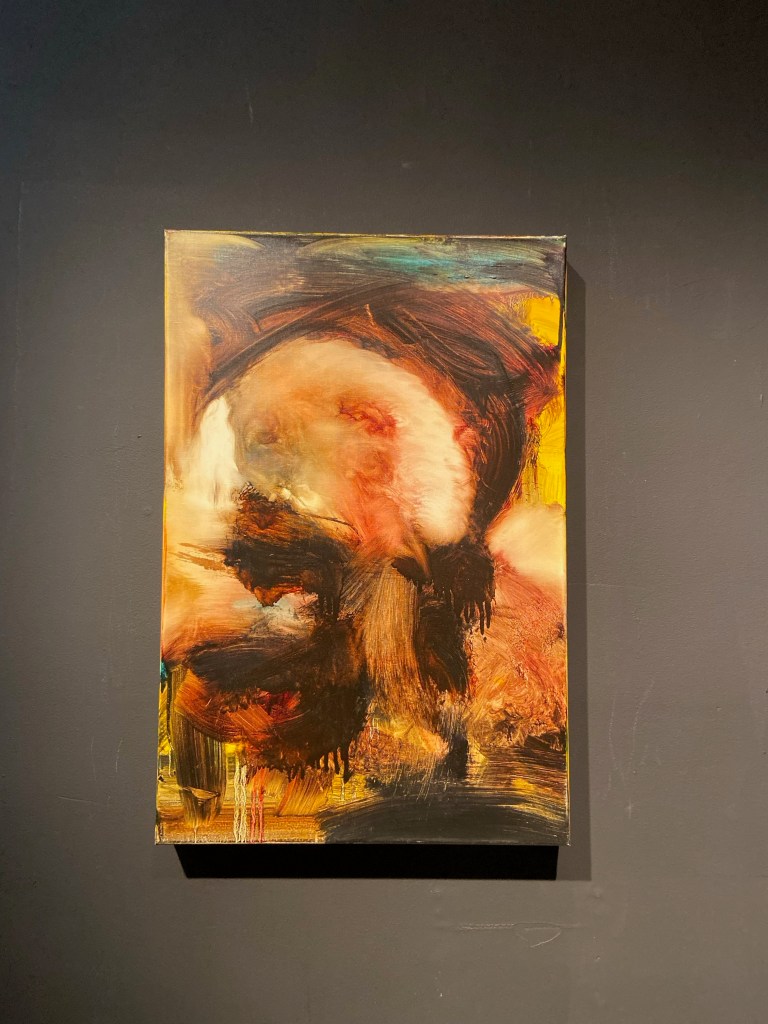
I invested in a polaroid camera and started taking images of my close ones. When using the camera I started experimenting with levels of exposure, when an image is made lighter or darker, using the flash, moving the camera whilst doing that. I use the image of my grandmother to make a painting on aluminium, but also taking from previous experiments of painting on Lino prints.

I used a painting that I had made previously to work on top of, layering images and colours. I enjoyed the surface, the slippery-ness of it allowed me to overlay and play with levels of transparency. In the future I aim for the figurative aspect to be more present.

Experiments

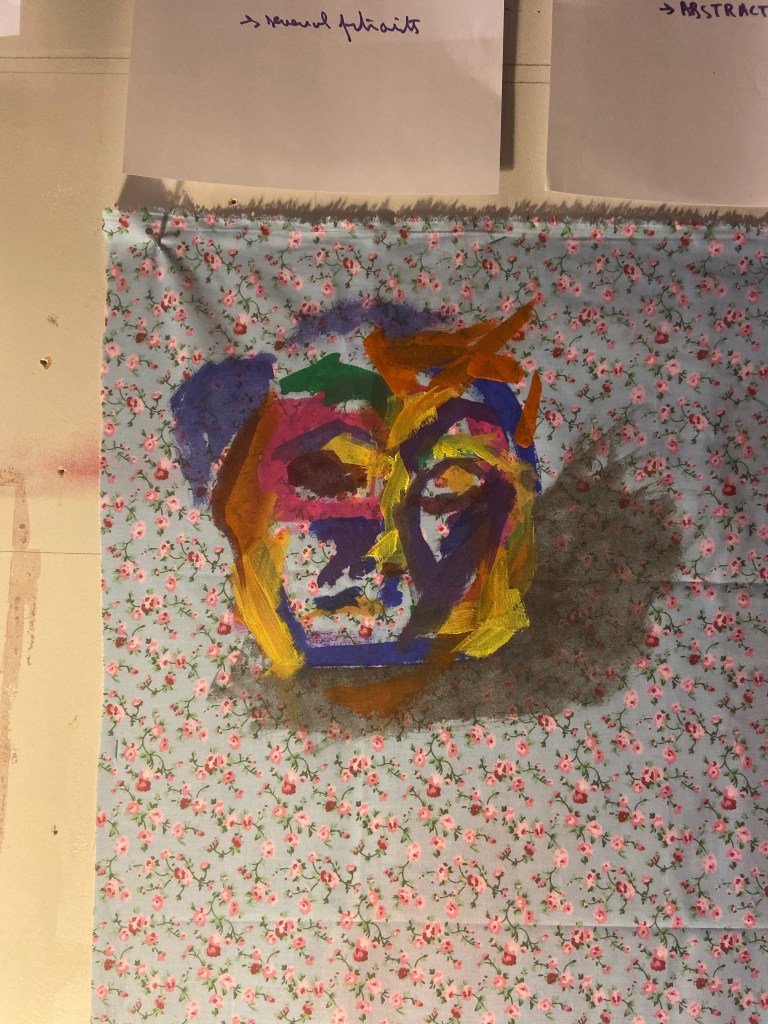
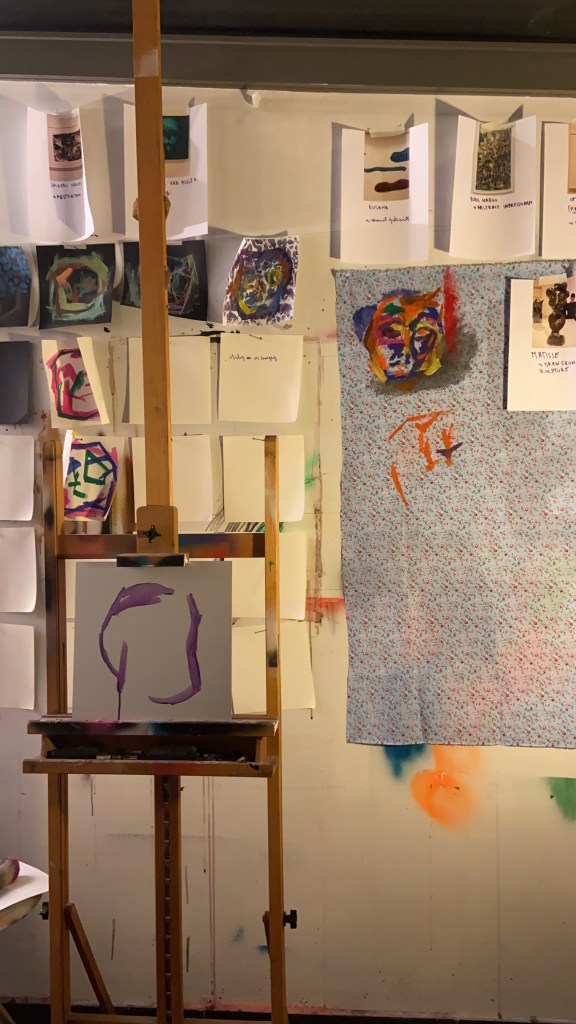
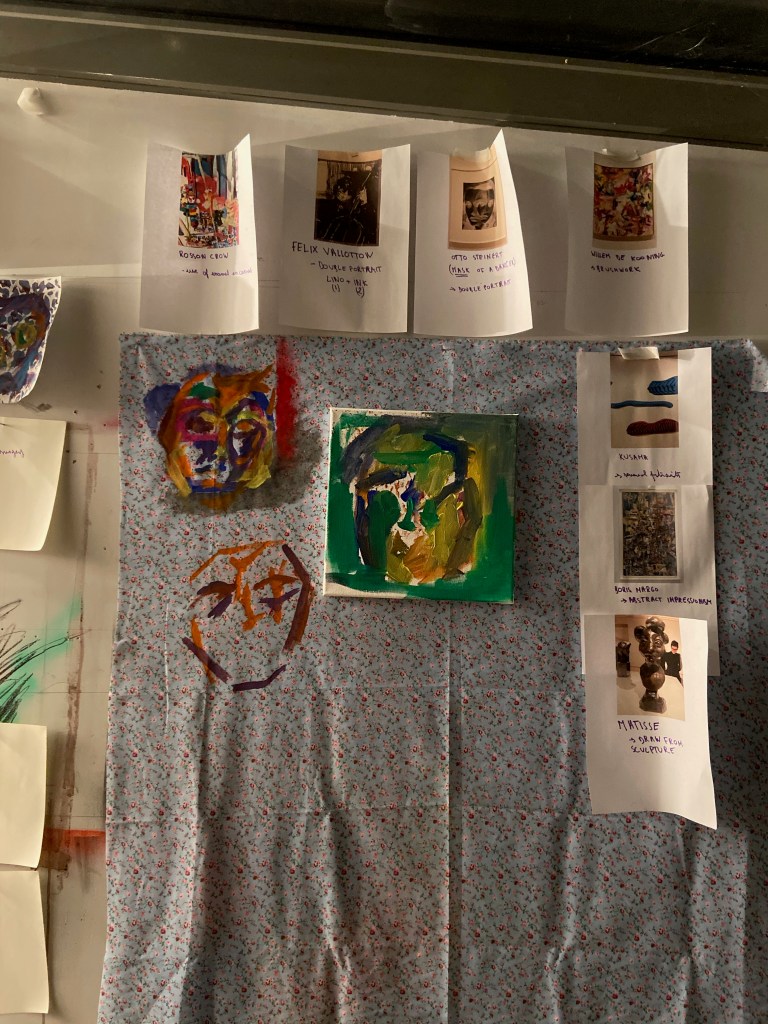
I started experimenting with my own ideas and tried representing an amalgamation of what I had seen enemy past gallery visits.

With these works I was playing with the idea of layering wallpaper like patterns with a looser rendering go the portraits that I had been painting. Trying to embrace the variety of portraits represented and versions of a same image.

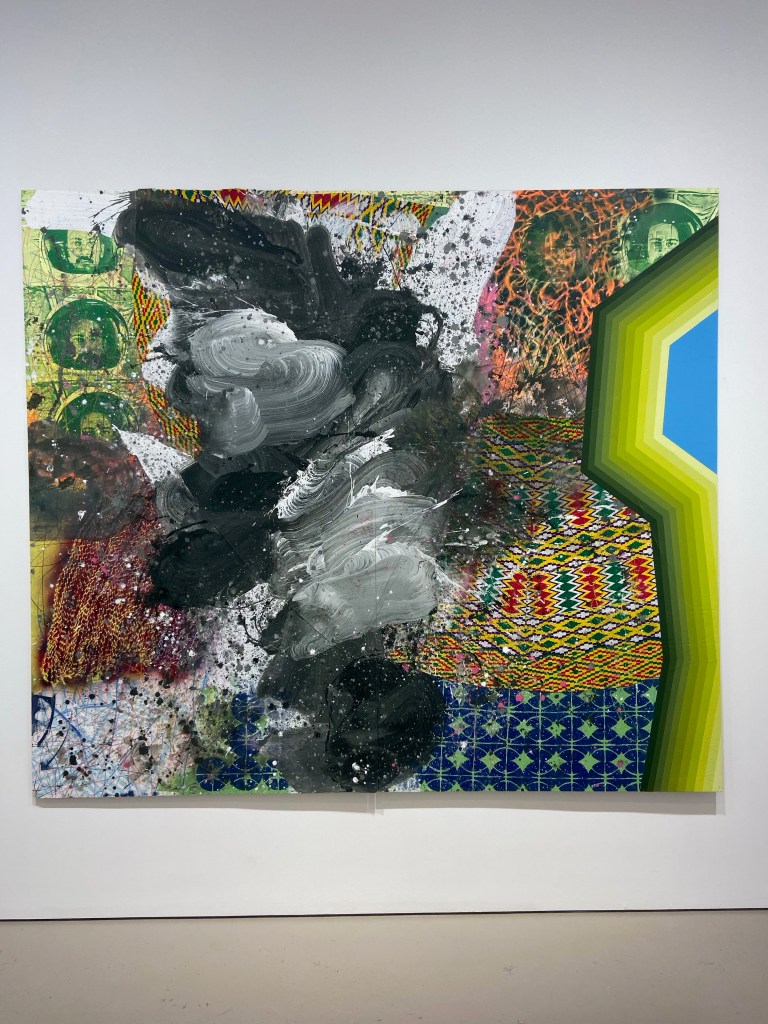
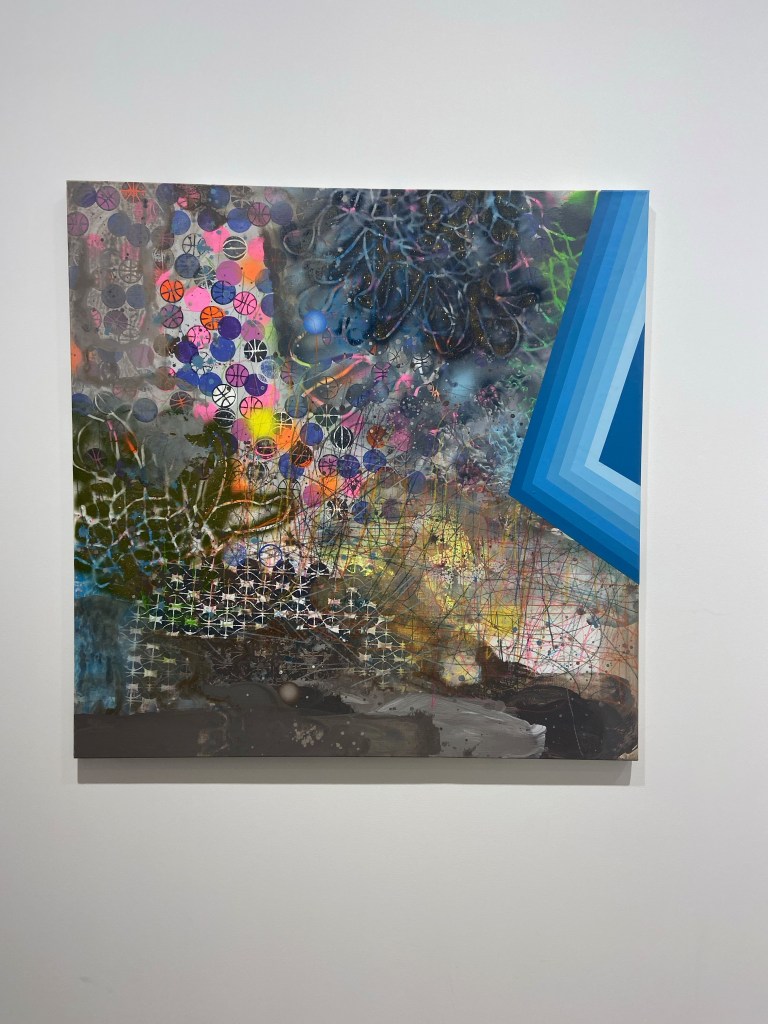
David Huffman

I found deep interest in David Huffman’s use of geometry and abstraction. His planes move and collapse within each other, whilst at the time coherently working as a group of forms within one single plane.

His use of colour is tempest like, making the different languages of painting work within and with each other.

This is something that I aim to represent when making my own work, a clash but marriage of shapes and forms.

Sewing Machine Drawings

Greta Bratescu (1926-2018)

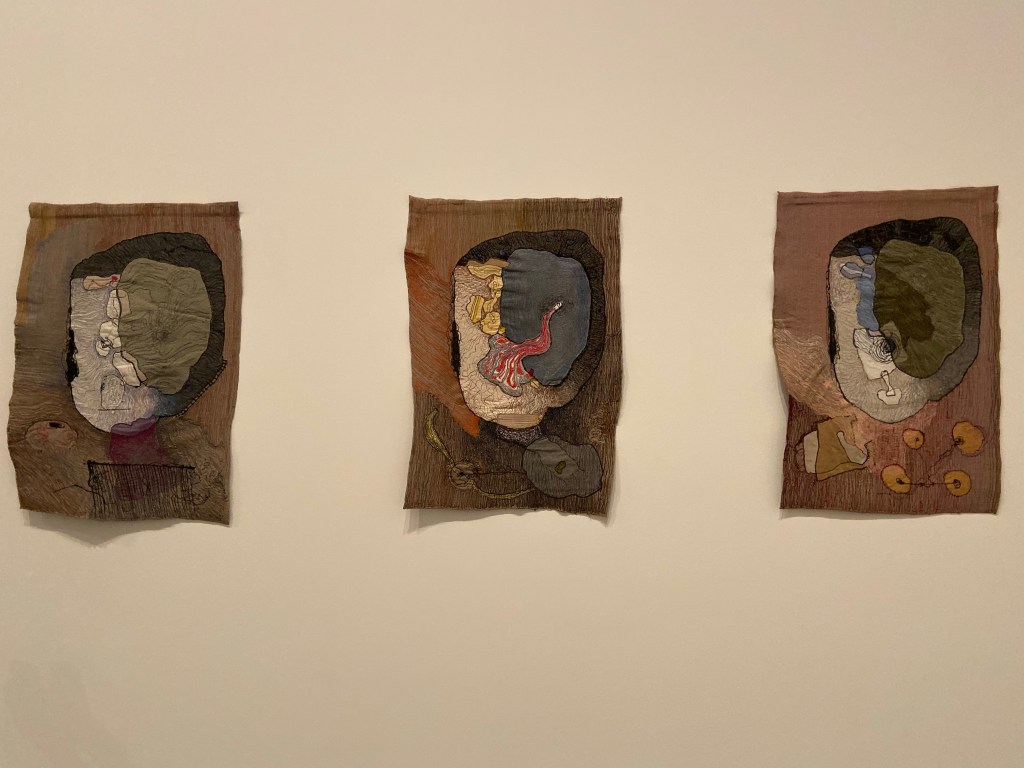
Greta Bratescu made those works whilst under the communist regime in Romania. She had limited materials at hand and often incorporated pieces of her mother’s clothing and textiles into her art. She used a sewing machine to turn drawing into a physically challenging act, one she compared to “sport”.

These works express the artist’s long time fascination to Medea, a sorceress from Greek mythology who appealed to the artist for her emotional complexity, a heroin for whom passion love and hate are equally powerful emotional motivations.

Gelatine silver print

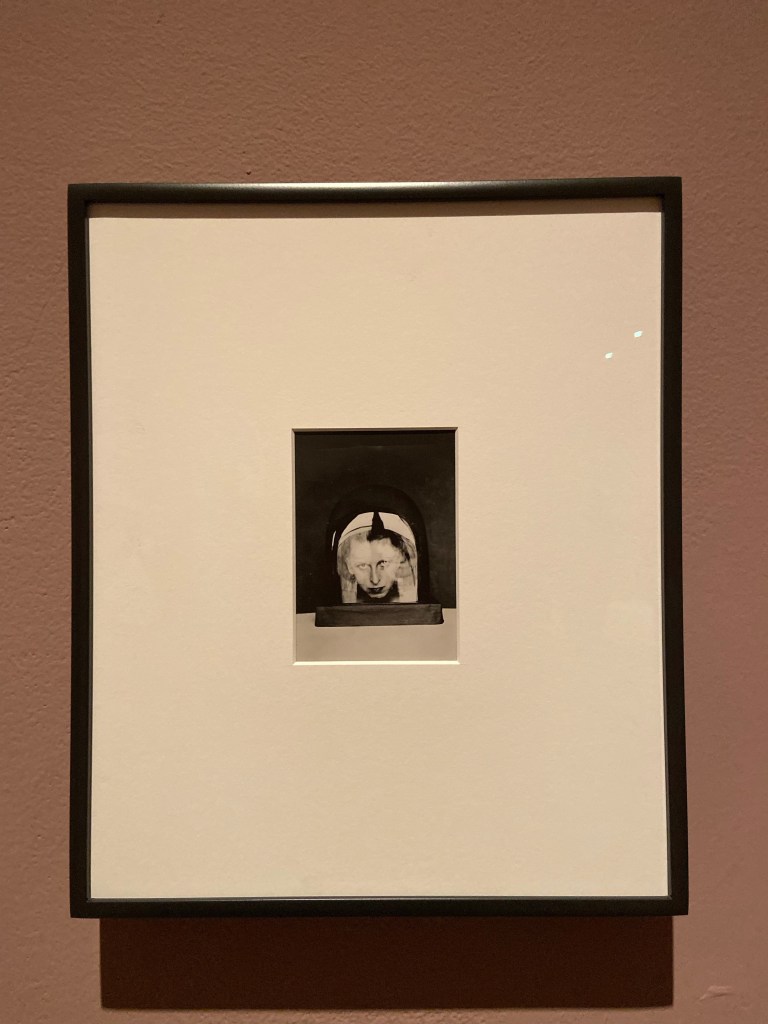
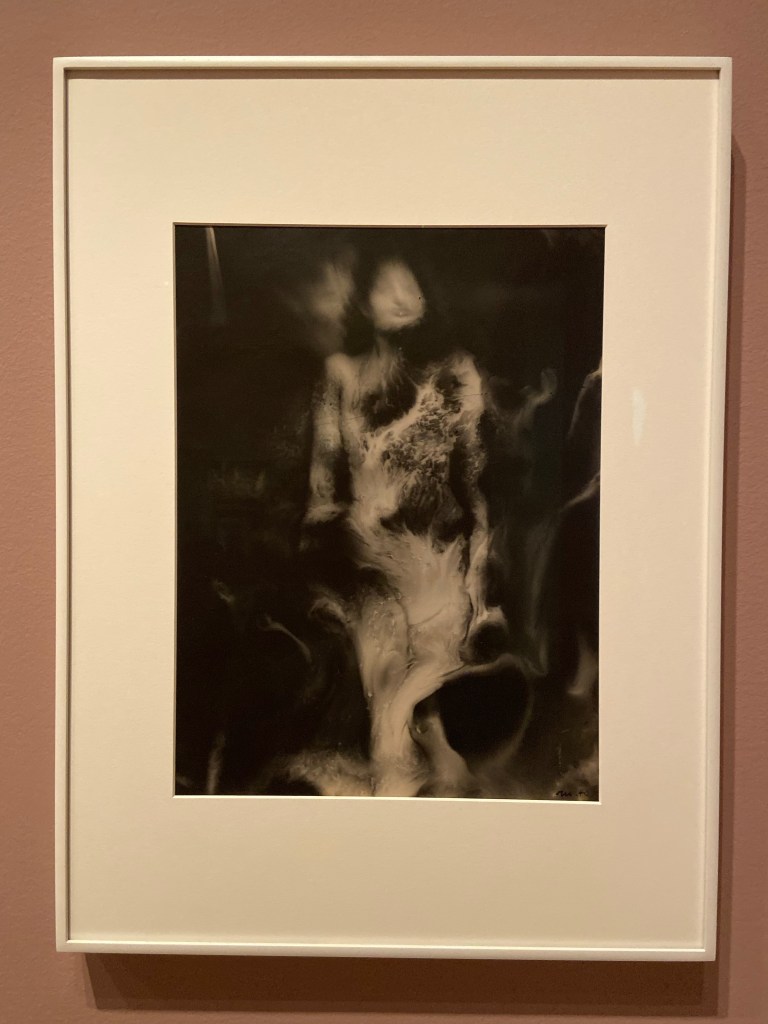
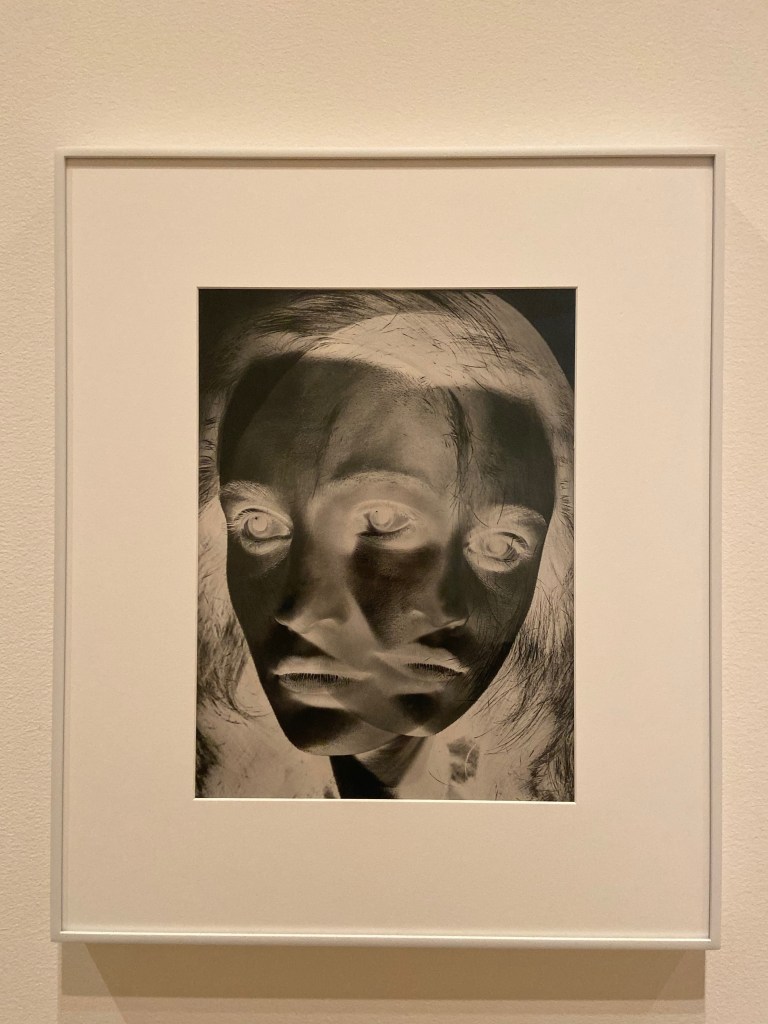
The below works led me to look at more gelatine prints, and the process that it involves. The double image and highlights that the process of gelatine silver print within modernist art are brilliant.

Claude Cahun (1894-1954)
Osamu Shiihara (1905-1974)
Raoul Ubac (1910-1985)
Otto Steinert (1915-1978)

The above work was titled “Mask of a Dancer”. I found so many answers in its composition, and emotion. It is an image that I have had on my wall whilst painting ever since I saw it. The overlaying of movement and of facial expressions is something that I have been trying to capture within my own use of photography.